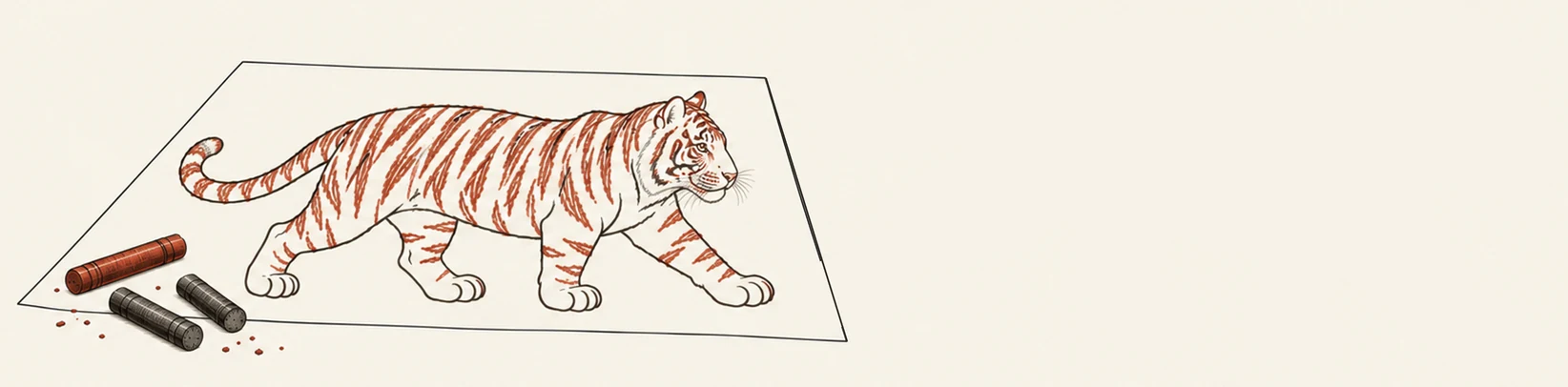
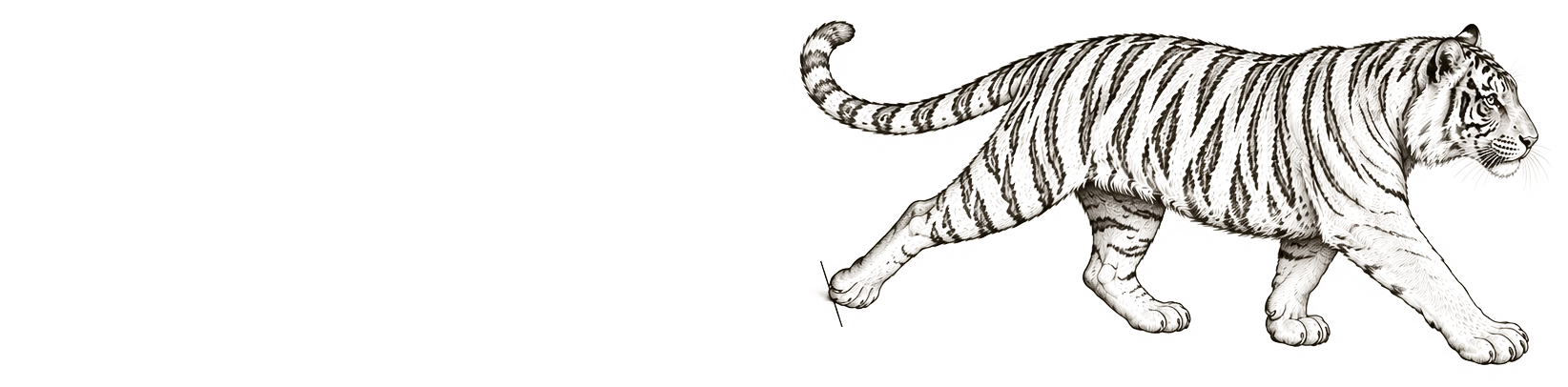
2012. A seven-year-old coloured in a tiger and watched it walk off the page, years before phones could do that on their own.
It started with a line I had carried from my last job. BigPark, the studio where I worked before and after Microsoft bought it, was founded to be the best fifteen minutes of your day. I wanted to build that properly: something for the hours between kids getting home from school and their parents getting home from work, better for them than hanging around outside a convenience store.
So we designed creatures you could only see for five minutes a day. They came from a world they had ruined and needed help rebuilding, which meant a child learned something about climate and science without feeling taught, because children stop playing the moment a game feels like school. The adventures were meant to happen outside: a walk in the city, a hike, a visit to a grandmother's house.
2012. A seven-year-old coloured in a tiger and watched it walk off the page, years before phones could do that on their own.
The magic moment had to work before anything else could.
Taking children on adventures came with safety questions a prototype could not answer, so we proved the idea at a desk. A child colours a tiger on paper, taps a button, and it stands up and walks around on the screen. Colour a pond, and the tiger goes to drink from it.
That last part was the hard one. One printed marker on a page could bring up one animal. Understanding that two of them were in view together, and what they meant together, was new in 2012. So was the rest of what we were working on: telling a table from a bed so a character could stand on it, and using Wi-Fi and maps to place an experience in the real world. The next step was planets a child coloured, turning a bedroom ceiling into a sky.
A two-person company needs both halves.
I was chief creative and chief product. My co-founder was the business: partnerships, and the attention that brings in a seed round. We had a chief technology officer lined up who had built medical imaging software and then 3D worlds at Electronic Arts, exactly the person to make an interactive diorama real.
Seven months in, money was getting tight, and my co-founder was offered a role at a large entertainment company. It was the right move for him, and we are still good friends. Our art director left soon after.
I had wanted a co-founder so that I would not be the one negotiating contracts. For months I carried product, design and the company on my own, paid for from my savings. Our technologist joined late, and we got to a working prototype with the testing done.
A seed offer arrived, and we agreed it in principle. Then the investor added a clause: the right to buy more of the company later, at the same price. We could have signed it. It also meant giving up control at the next real round.
Around then, Vancouver Film School offered me a role that grew into running its design program. The company needed all of someone's time, and I did not have it to give. I stopped.
We saw what a world layered over the real one could do for families. Five years later, so did everyone else.
What I got wrong was not the idea.
I treated a shared idea as a shared commitment. We never sat down and said what each of us would put in, for how long, and what would end it. So every departure arrived as a surprise, when it could have been a condition we named on the first day. I simply ran out of steam.
What I do now. Before any partnership, a friendship included, we do the value-alignment exercise: what each of us is building this for, what each of us will put in, and what ends it. I have told this story on a stage, at Fuck Up Nights in Victoria, because it is the most useful thing I know about starting something.
The same idea became a school.
By then I was teaching in a design program, in a role that grew into running it. Everything I had wanted for those children, a place to make things, real people to make them for, and the freedom to fail while it costs nothing, fitted inside a classroom. That is the next story.
The idea was right. We had never agreed what it would cost each of us.